Feast Day: April 29th
Doctor of the Church
Patron Saint of Italy, Nurses, Those seeking spiritual direction.
“Be who God meant you to be and you will set the world on fire”. St. Catherine Siena
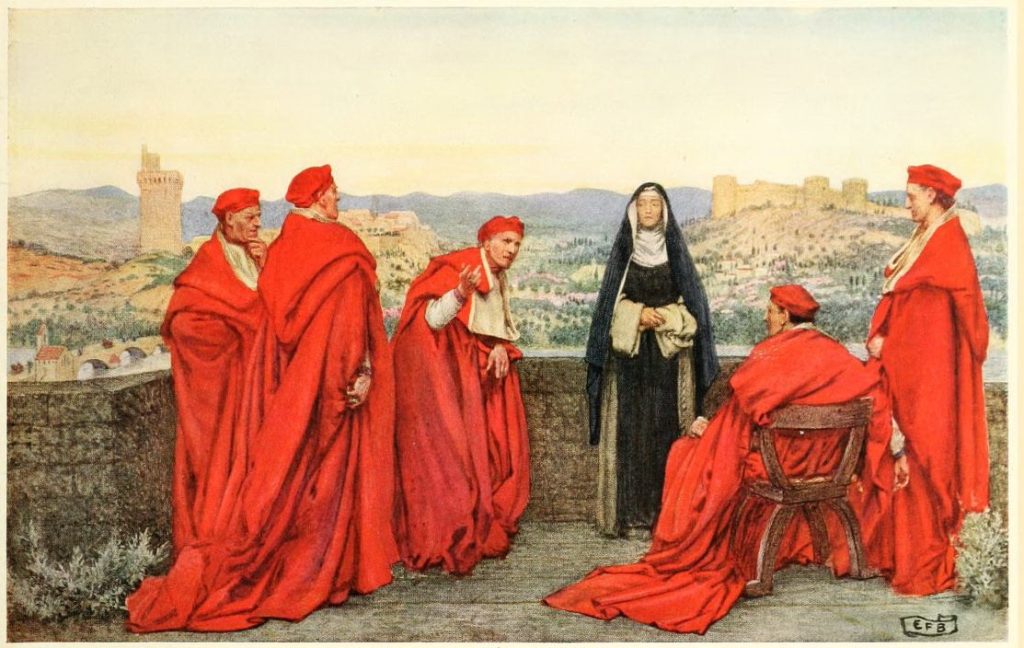
Andrea Vanni depicts St. Catherine of Siena surrounded by men in red robes, representing cardinals and Church officials of her time. These figures highlight her extraordinary influence as a lay woman who boldly wrote to and advised Church leaders during a period of serious division.
St. Catherine is best known for helping to inspire Pope Gregory XI to return the papacy from Avignon to Rome in 1377, restoring the pope’s residence to its traditional seat. Through her powerful letters and personal appeals, she urged him to bring unity and reform to the Church.
Her halo signifies her sainthood and closeness to Christ, while her calm presence reflects her spiritual authority rooted in prayer, courage, and truth rather than position or power.
“Saint Catherine by Andrea Vanni” — Wikimedia Commons. Link to source: Andrea Vanni, Public domain, via Wikimedia Commons
Faith Journey
St. Catherine of Siena (1347–1380) was born in Siena, Italy, during a time of plague, political turmoil, and deep division within the Church. From a young age, she experienced profound spiritual encounters with Christ that shaped the direction of her entire life.
As a child, Catherine made a private vow of consecration to God and resisted pressure from her family to marry. Instead, she devoted herself to prayer, solitude, and service to the poor and sick. Over time, she joined the Dominican Third Order, living in the world but fully committed to a life of prayer, penance, and charity.
Her faith deepened through mystical experiences in which she described a “spiritual marriage” with Christ, anchoring her identity not in worldly status but in total union with God.
Challenges and Virtues
Despite these challenges, she lived with extraordinary virtues:
- Courage – She wrote boldly to popes and urged reform in the Church
- Charity – She cared for the sick and poor during the plague
- Humility – She consistently described herself as “nothing” without God
- Wisdom – Her writings reveal deep theological and spiritual insight
- Perseverance – She remained faithful even under criticism and exhaustion
Her life shows a balance of mysticism and action—deep prayer that led to courageous service

Canonization and Legacy
After her death in 1380 at only 33 years old, Catherine’s reputation for holiness spread rapidly throughout Europe. People began to recognize her as a powerful intercessor and spiritual guide.
She was canonized in 1461 by Pope Pius II, just a few decades after her death.
Her legacy continues today through:
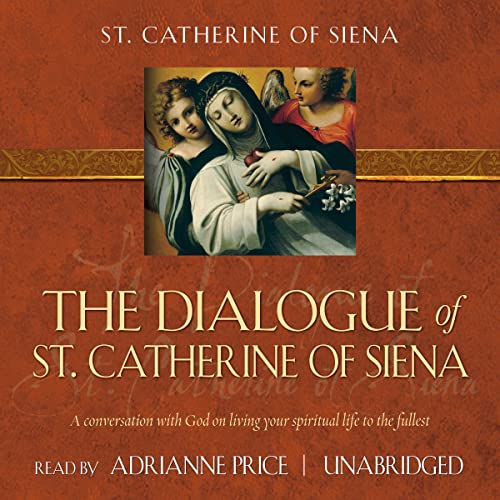
- Her writings, especially The Dialogue, a profound spiritual work
- Her influence on Church reform and unity during the Western Schism
- Her recognition as a Doctor of the Church (1970)
- Her role as Co-Patron of Europe alongside other great saints
St. Catherine remains a powerful reminder that holiness is not limited by age, gender, or circumstance. Her voice continues to call believers to deeper prayer, courage, and commitment to truth.