
The Battle of Lepanto – 1571
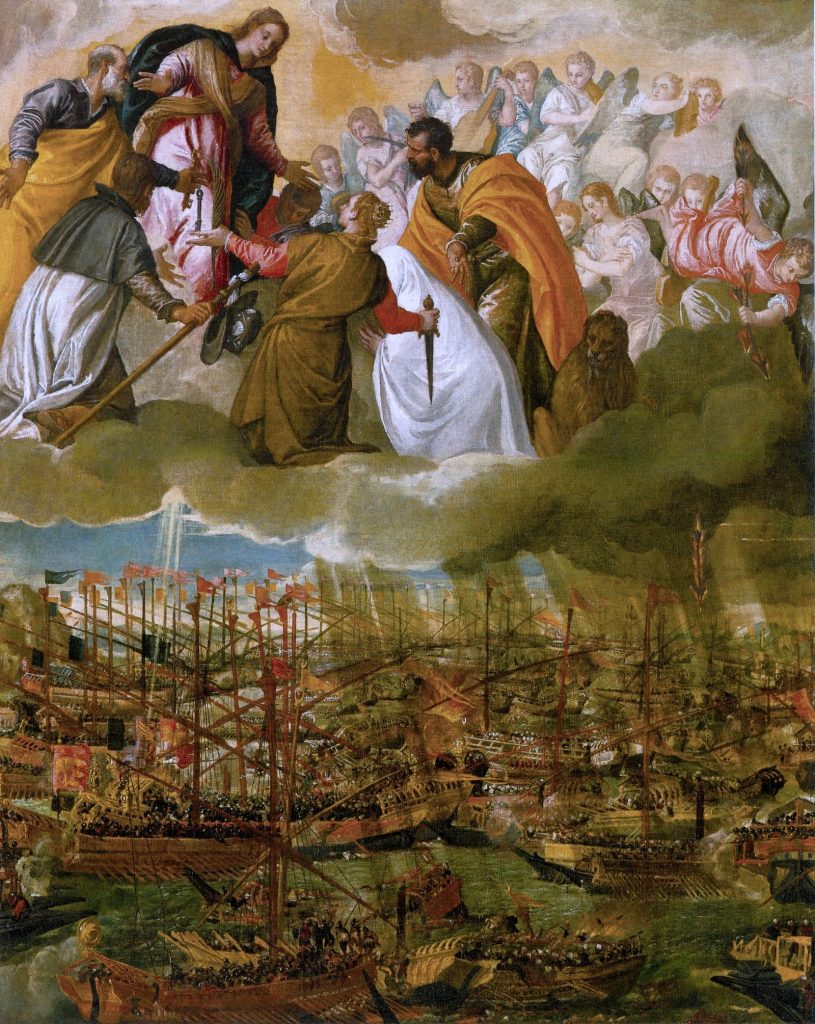
“The Allegory of the Battle of Lepanto,” Paolo Veronese, c. 1572. Public domain.
Each year on October 7, the Church celebrates the Memorial of Our Lady of the Rosary—a feast that honors Mary’s powerful intercession and the victory of faith over fear. Behind this feast lies a rich story that connects a 13th-century saint, a miraculous naval battle, and one of the most beloved devotions in the Catholic Church: the Rosary.
The Origins: Saint Dominic and the Gift of the Rosary
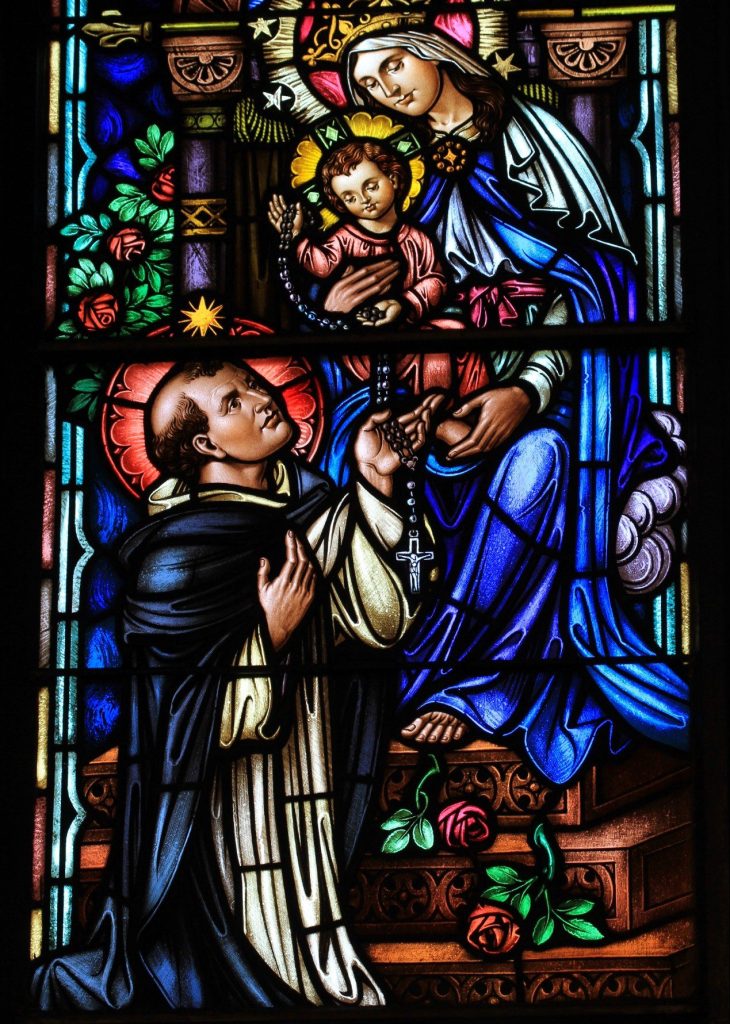
Dominican Friars Foundation – Blessed Virgin Mary Archives. https://dominicanfriars.org/tag/blessed-virgin-mary/
The story begins with Saint Dominic de Guzmán (1170–1221), a Spanish priest whose life was marked by prayer, study, and compassion for souls. Born in Caleruega, Spain, Dominic was known for his brilliance and kindness. As a young priest, he encountered the Albigensian heresy in southern France—a movement that rejected the goodness of creation and the Incarnation of Christ. Seeking a way to convert hearts, Dominic turned to prayer.
According to tradition, in 1212, the Blessed Virgin Mary appeared to him, offering him the Rosary as a spiritual weapon—a chain of meditations on the life of Jesus meant to lead people back to truth and peace. As Vatican News explains:“The Holy Rosary originated in 1212 when Saint Dominic de Guzmán saw the Virgin Mary who gave him the Rosary as a response to his prayer to understand how to combat the Albigensian heresy.”
Through the Rosary, Mary invited the faithful to find refuge, comfort, and strength—to hold in their hands a “shield” of faith and contemplation. Dominic spent the rest of his life preaching and teaching the Gospel with clarity and humility, founding the Order of Preachers (Dominicans).
The Battle of Lepanto: The Prayer That Changed History
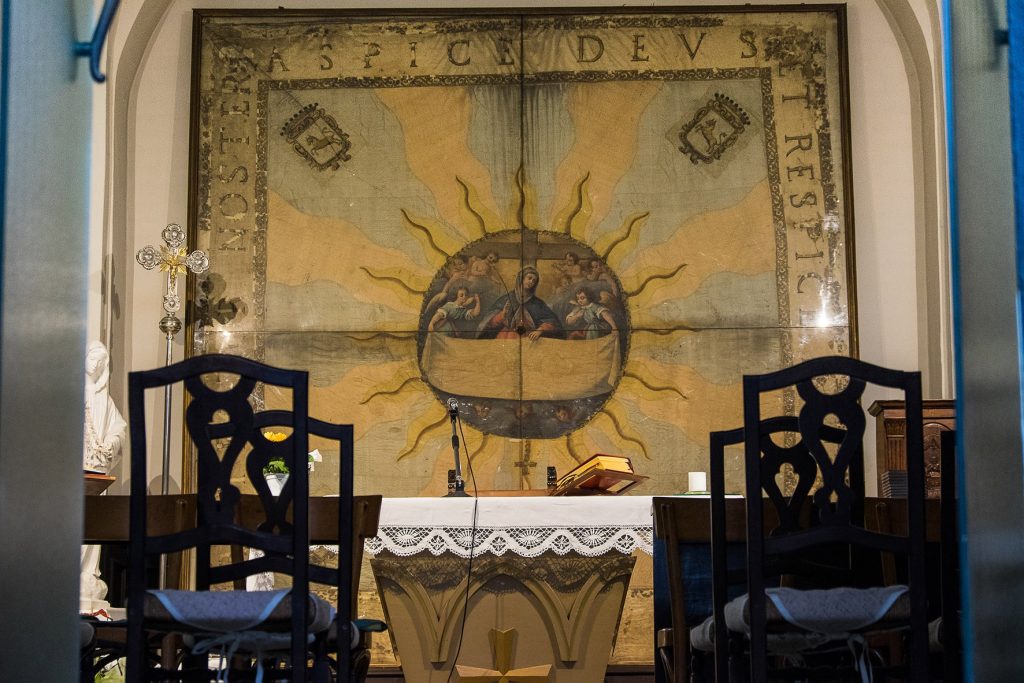
Source Credit: Turin History – Facebook Post
https://www.facebook.com/TurinHistory/posts/2322764717995773
This image depicts the banner associated with the Battle of Lepanto (1571), displayed in the Church of San Domenico in Turin. The authenticity of the banner has been a subject of debate among historians, with some considering it a genuine relic from the battle, while others view it as a later devotional replica. The banner is part of the church’s rich history and is displayed as a testament to the devotion and historical significance of the event.
Centuries later, in 1571, the Christian world once again faced a grave threat. The Ottoman Empire was advancing across the Mediterranean, poised to invade Europe. In Rome, Pope St. Pius V, himself a Dominican deeply devoted to Our Lady, called on all Christians to unite—not only in arms but in prayer.
As recorded in The Martyrology of the Monastery of the Ascension, Pius V had risen from humble beginnings—a shepherd boy who joined the Dominicans, became a university lecturer, reformer, and eventually pope in 1566. He immediately set out to renew the Church according to the reforms of the Council of Trent, emphasizing holiness among clergy and faithfulness among the people.
When news came of the Ottoman threat, Pius V organized a coalition of Christian forces called the Holy League. Before the fleet set sail, he blessed their banner bearing the Crucifix and the motto “In hoc signo vinces” (“By this sign you shall conquer”), as well as another flag depicting the Madonna with the words “Sancta Maria, succurre miseris” (“Holy Mary, help of those in need”).
Then he called the entire Christian world to pray the Rosary for victory. Across Europe, churches and confraternities gathered in prayer, echoing the same devotion once preached by Saint Dominic.
On October 7, 1571, the Christian forces miraculously defeated the Ottoman navy at the Battle of Lepanto, despite being greatly outnumbered. The victory was so unexpected that Pope Pius V attributed it entirely to Our Lady’s intercession through the Rosary.
In thanksgiving, he established the Feast of Our Lady of Victory in 1572, later renamed by Pope Gregory XIII as the Feast of Our Lady of the Rosary—a name that has endured ever since.
The Legacy of the Rosary
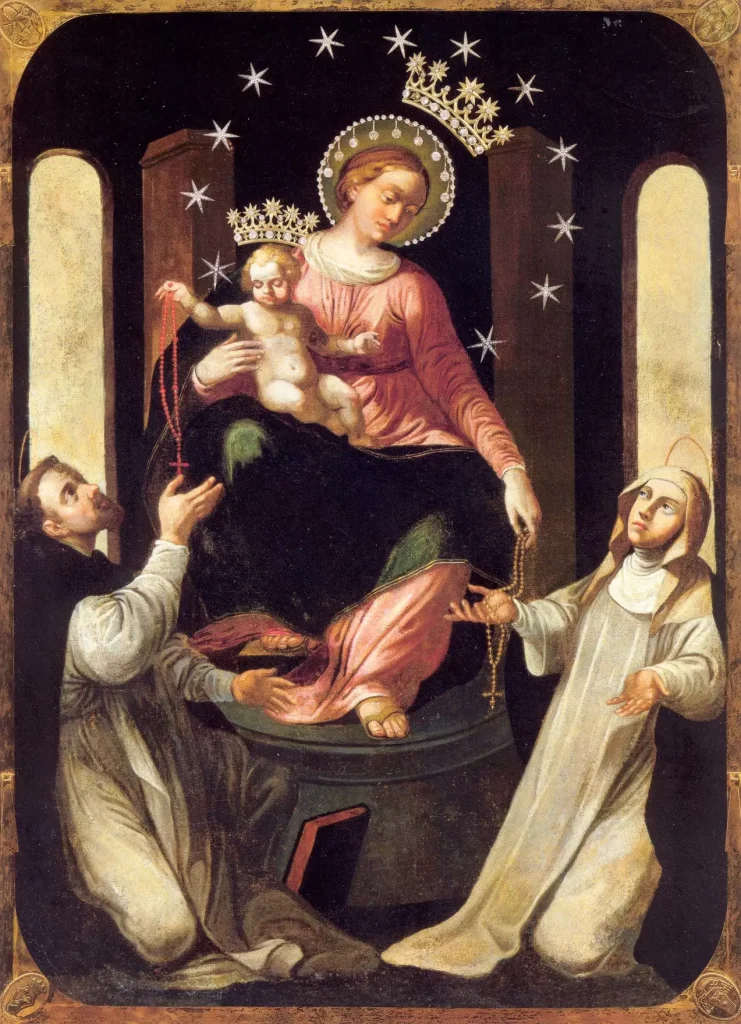
“Our Lady of the Holy Rosary of Pompei” icon, Pontifical Shrine of the Blessed Virgin of the Rosary of Pompei, Italy. Website: HolyRosary.com.au
The victory at Lepanto became a powerful reminder of what Saint Dominic had first understood: that the Rosary is both prayer and power, contemplation and courage.
Over the centuries, other victories—such as the defense of Vienna in 1683—were also attributed to Our Lady’s protection through the Rosary. In later apparitions, including Lourdes and Fatima, Mary would again urge her children to pray the Rosary daily for peace, unity, and the conversion of hearts.
Today, the Rosary continues to be a living link between heaven and earth—a simple, rhythmic prayer that leads believers into the mysteries of Christ’s life. The most famous shrine dedicated to Our Lady of the Rosary stands in Pompei, Italy, where the feast is celebrated on May 8, a testament to the enduring devotion inspired by both Saint Dominic and Our Lady’s intercession.
Reflection
The Memorial of Our Lady of the Rosary is not merely a remembrance of a naval victory; it is a celebration of faith in action. It unites Saint Dominic’s contemplative vision with Pope Pius V’s courageous call to prayer—a reminder that every battle, whether external or internal, is won through trust in God and devotion to Mary.
Each “Hail Mary” is a small act of faith, but together, the Rosary becomes a powerful chain of grace—linking hearts, nations, and centuries in one continuous prayer:
“Holy Mary, Mother of God, pray for us sinners, now and at the hour of our death. Amen.”