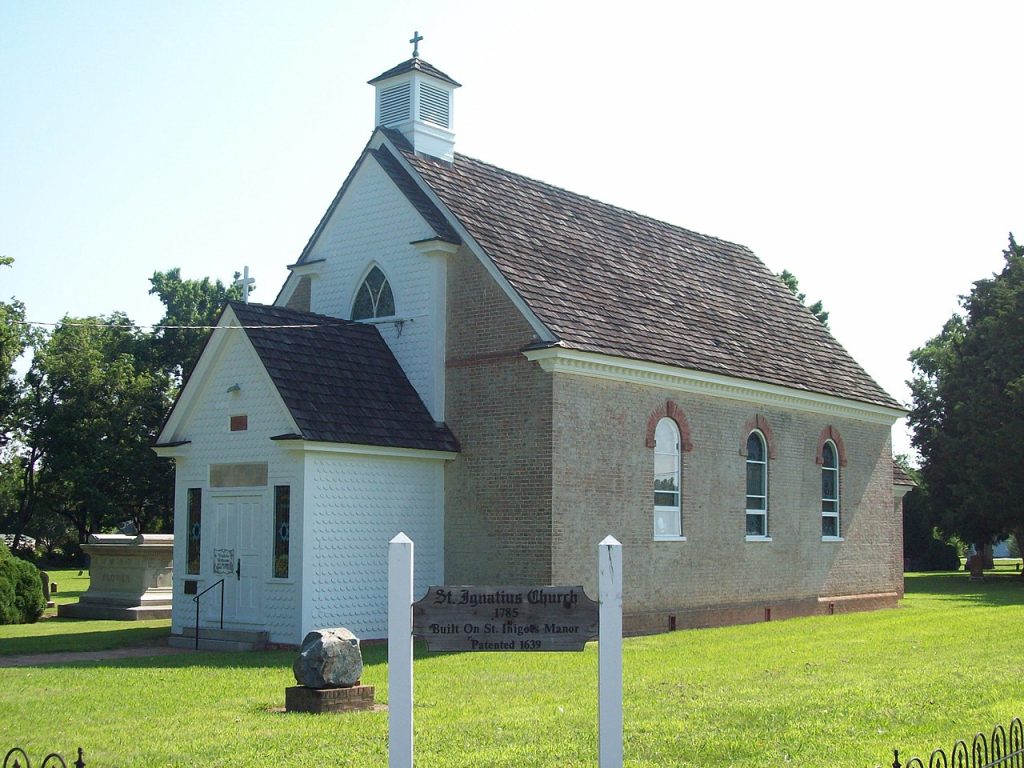
St. Ignatius Chapel Point, the oldest Catholic parish in the U.S.
St. Ignatius at Chapel Point, Maryland
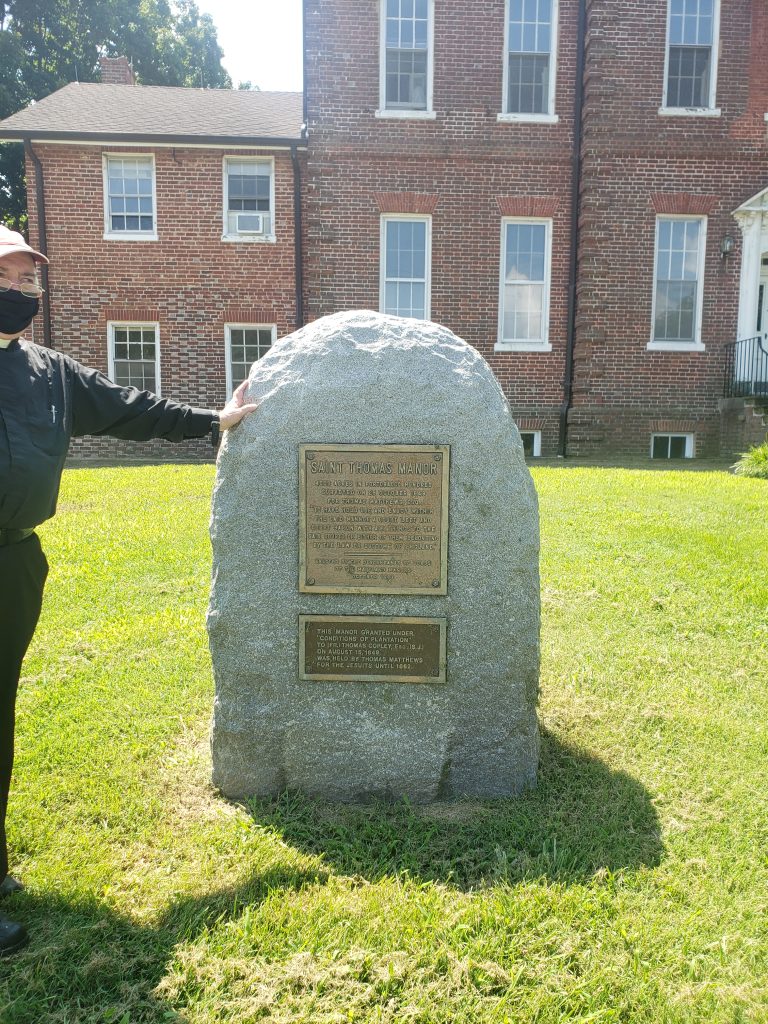
The roots of Catholicism in Maryland stretch back to 1634 when Catholic Lord Baltimore founded a colony with freedom of religion and separation of church and state. The Jesuits of the English Province were invited to serve as missionaries. In 1641, Fr. Andrew White, S.J., and his companions established a mission at Chapel Point to bring the Gospel to the Piscataway people. Religious tensions, however, forced the Jesuits out in 1645. By 1662, they returned after receiving a land grant of 4,000 acres from Lord Baltimore. Tobacco farming — first by indentured servants and later, tragically, by enslaved laborers — sustained the Jesuits’ ministry.
The 1697 brick chapel that still stands today as the sacristy is a testament to this endurance. In 1741, the Jesuits built St. Thomas Manor, which became their American headquarters. Though destroyed by fire in 1866, the parish was quickly rebuilt. Today, St. Ignatius is recognized as the oldest continuously active Roman Catholic parish in the United States.
Heroes of Early Catholic History
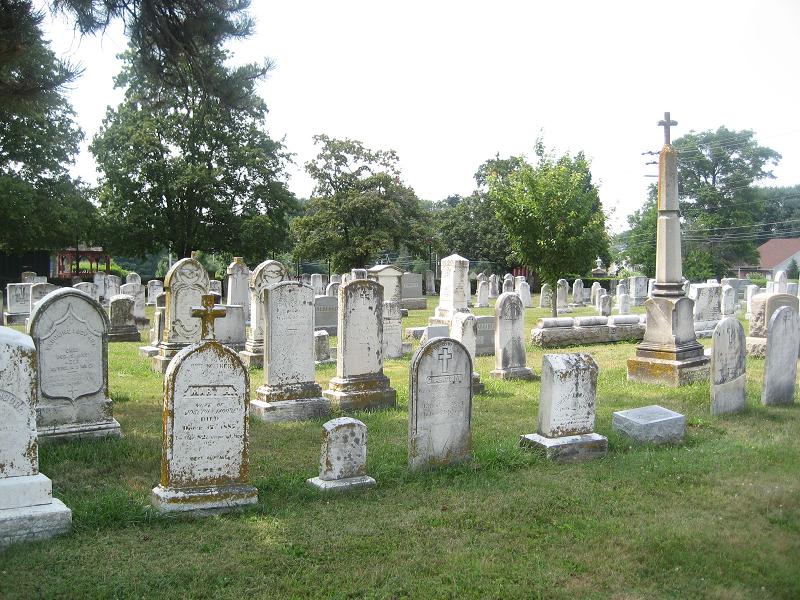
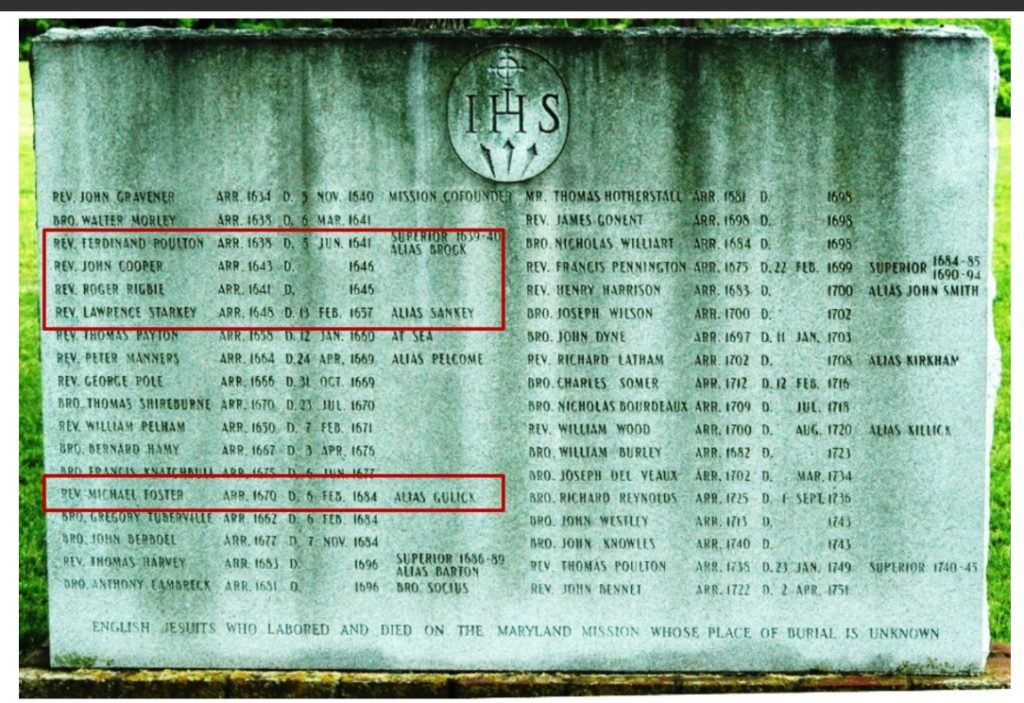
St. Ignatius at Chapel Point stands today not only as the nation’s oldest continuous Catholic parish, but also as a memorial to the men and women who laid the foundations of Catholic life in America. The Jesuit Wall of Remembrance honors these heroes for their courage, perseverance and fidelity during times of persecution ensuring that our faith would take root and flourish.
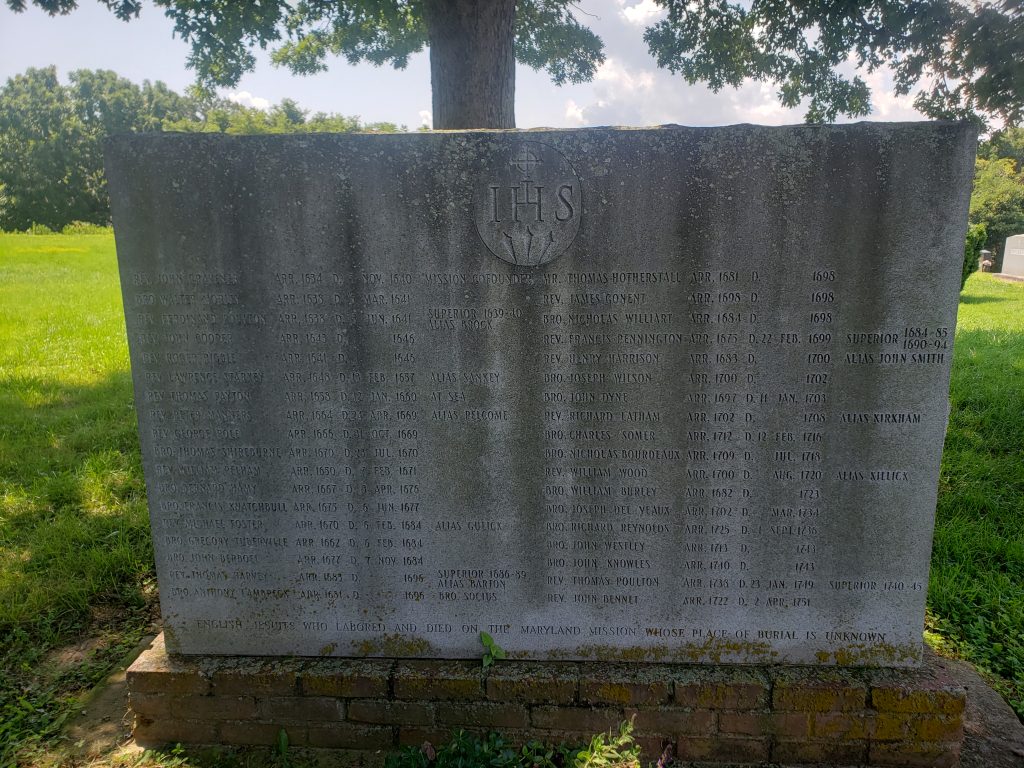
Among the heroes remembered in Maryland’s Catholic story are the Virginia Jesuit Martyrs—Father John Cooper, Father Roger Rigbie, and Father Hartwell—who were killed in 1646 by the Susquehannock Native Americans during a time of great turbulence on the frontier. These priests had come to minister in the Chesapeake, carrying the Gospel to Native peoples at the risk of their lives. Their deaths, though tragic, became a powerful witness to the perseverance of Catholic missionaries in the face of violence and uncertainty. Their sacrifice stands as one of the earliest testaments to the cost of faith in colonial America. Today, the memory of these martyrs is woven into the heritage of St. Ignatius at Chapel Point and the wider Catholic story in Maryland, reminding us that the Church’s roots were watered by courage and sacrifice.
Father Francis Ignatius Neale, S.J.
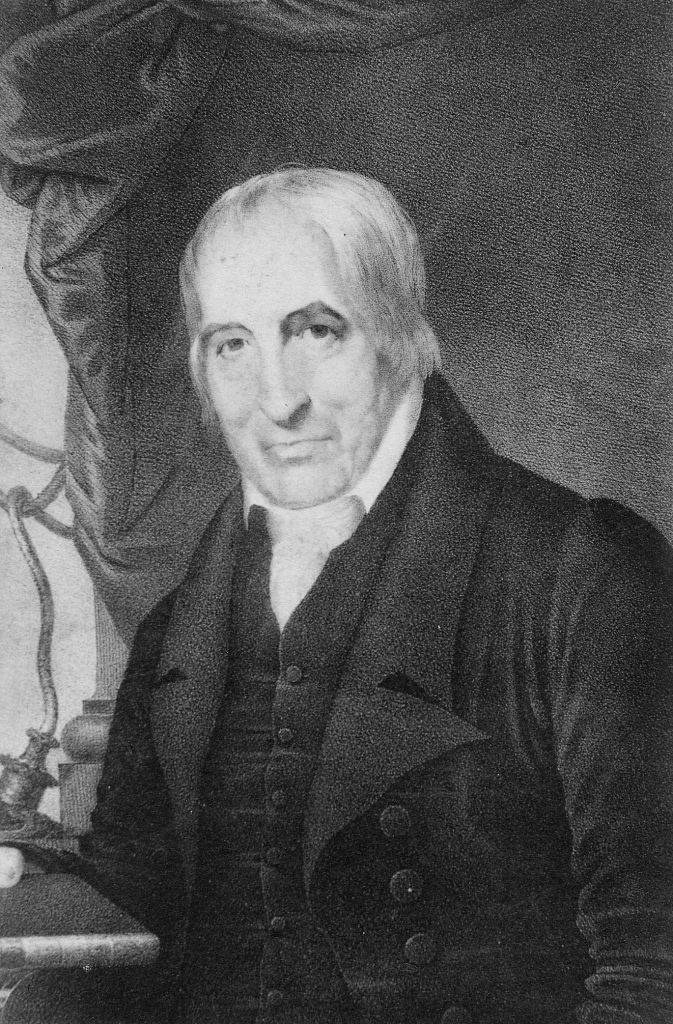
Founding Priest of St. Mary’s Catholic Church
Father Francis Ignatius Neale, S.J. a member of one of Maryland’s most influential Catholic families. Born in 1754, he was the son of William Neale and Anne Brooke, who had thirteen children and a direct descendant of Captain James Neale of Wollaston Manor, who had settled in Maryland in the 1640s. Two of Father Francis Ignatius Neale’s brothers died in childhood, while the four surviving sons all entered the priesthood. Most Reverend Leonard Neale became the second Archbishop of Baltimore, guiding the growing American Church in the early 19th century. Reverend Charles Neale later served as Superior of the American Jesuit community, overseeing Jesuit missions across the young nation. Reverend Francis Neale himself became president of Georgetown College and founding pastor of St. Mary’s Catholic Church in Alexandria, The Neale family also produced religious women: his siter, Anne Neale entered the Order of Poor Clare’s in Aire-sur-la-Lys, France, dedicating her life to contemplative prayer. Another sister, Mary Neale Williams, became the mother of Reverend William Matthews, who would himself go on to serve as president of Georgetown College, continuing the family’s remarkable legacy of faith and service.
The Neale family quickly became one of the strongest pillars of Catholic life in colonial Maryland. Through marriage and kinship, they were tied to the Brent family, who were among the first champions of religious toleration in the colony. Margaret Brent, remembered for her bold defense of property rights and religious liberty, was an ancestor and kin to the extended Neale line.
Fr. Francis Ignatius Neale entered the Society of Jesus and was ordained in 1770. In 1795, he was sent to Virginia, where he became the first resident pastor of St. Mary’s Catholic Church in Alexandria, a parish founded to serve the growing Catholic population in the region. His leadership provided stability and growth for a faith community that had long been scattered and persecuted.
The First Carmelite Monastery in America.
The Discalced Carmelite Nuns of Carmel Port Tobacco
The story of Maryland’s Catholic families is one of deep interconnection, faith, and dedication. Ann Matthews of Charles County, Maryland, who would take the religious name Sister Bernardina Teresa Xavier of Saint Joseph, exemplifies this devotion. In 1754, she traveled to Belgium to enter the Carmel of Hoogstraeten, joining a religious life that was, at the time, impossible to pursue in the American colonies. Ann came from a family of devout Catholics. Her brother, Father Ignatius Matthews, played a pivotal role in encouraging her to return to America after independence and establish the first Carmelite monastery.
In 1790, Sister Bernardina, her nieces, and another sister from the Carmel in Antwerp sailed to Port Tobacco, Maryland, to found the monastery that would become the first of its kind in the United States.
Their journey and early establishment were closely linked to the Neale family, one of Maryland’s most prominent Catholic lineages. Father Charles Neale, S.J., brother of Father Francis Ignatius Neale (founding pastor of St. Mary’s Church in Alexandria and president of Georgetown College), accompanied the sisters as their spiritual guide. Through the Neales, the Carmelites were supported not only with guidance and leadership but also with land, resources, and the deep ties of Maryland’s Catholic network.
This connection highlights how the Catholic Church in early America was built on family networks and collaborative faith, with the Matthews and Neale families working together to ensure that religious life could flourish in the new nation. The Neales provided clerical leadership, while the Matthews brought pioneering religious zeal, culminating in the foundation of the first Carmelite monastery in the United States.